


I made you a promise that I’d try to explain health in a way that actually makes sense. This is my attempt to make digestion easier to picture—and to show why understanding it can help you build health wisdom.
Maybe the same jeans that felt comfortable before dinner feel snug by dessert. That change is real; it does not automatically mean something is wrong. Food and fluid are moving through a working digestive system. Thanksgiving gives us a familiar scene to talk about it, but this happens after meals every day.
Well-Established: Follow a bite through your digestive system
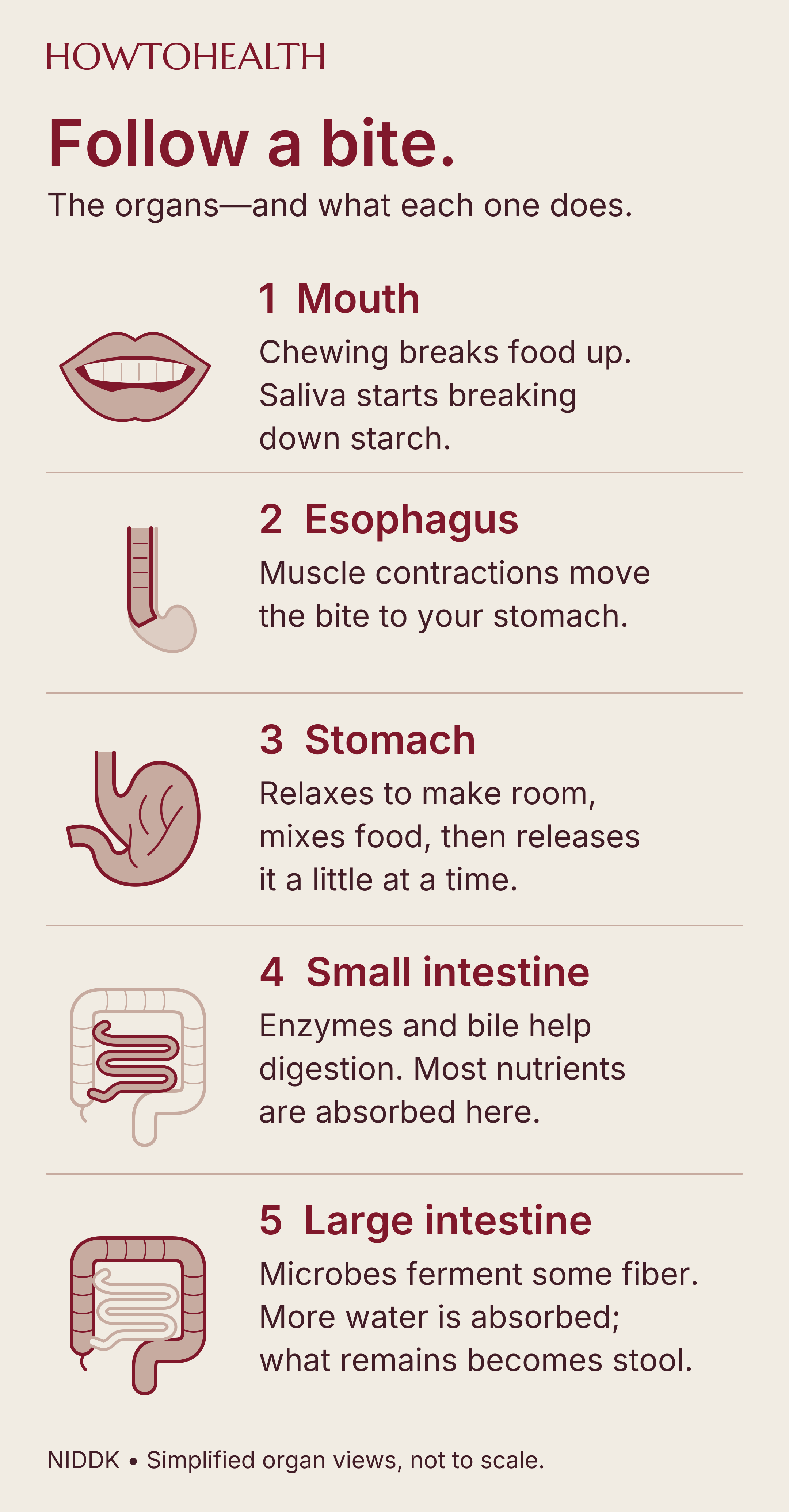
Take a bite of stuffing. Your teeth break it into smaller pieces, and saliva moistens it. An enzyme in saliva begins breaking down starch before you swallow.
The bite travels down your esophagus to your stomach. Picture the stomach as a stretchy mixing pouch with a carefully managed exit. As food arrives, its upper part relaxes and expands to make room—a normal process called gastric accommodation. The stomach churns food with acid and enzymes, then releases the mixture into the small intestine a little at a time.
That gradual hand-off is one reason a meal takes time to move through you. Fullness is a real sensation, but it is not a stopwatch that tells you exactly how quickly your stomach is emptying.
The small intestine continues digestion with enzymes from the pancreas; bile helps disperse fat so enzymes can act on it. Most nutrients are absorbed here.
Carbohydrates are broken into absorbable sugars.
Proteins become amino acids and small peptides (short chains of amino acids). Intestinal cells break down many of those peptides further before the amino acids enter the blood.
Fats are broken into smaller components the body can absorb.
Most fiber reaches the large intestine, where microbes ferment some types and water is absorbed.
Why your belly can change after a meal
Your stomach stretches to make room, but your visible belly is not a direct picture of your stomach. After eating, food, fluid, and bowel contents take up space in the digestive tract. Swallowed air and gas made when gut microbes ferment some carbohydrates can add to the feeling or appearance of fullness.
Current evidence suggests more is involved. In healthy volunteers, the diaphragm (the breathing muscle beneath your lungs) and upper abdominal muscles adjusted as a meal filled the stomach. In another small study of healthy women, abdominal measurements changed after meals, with posture, and across the day.
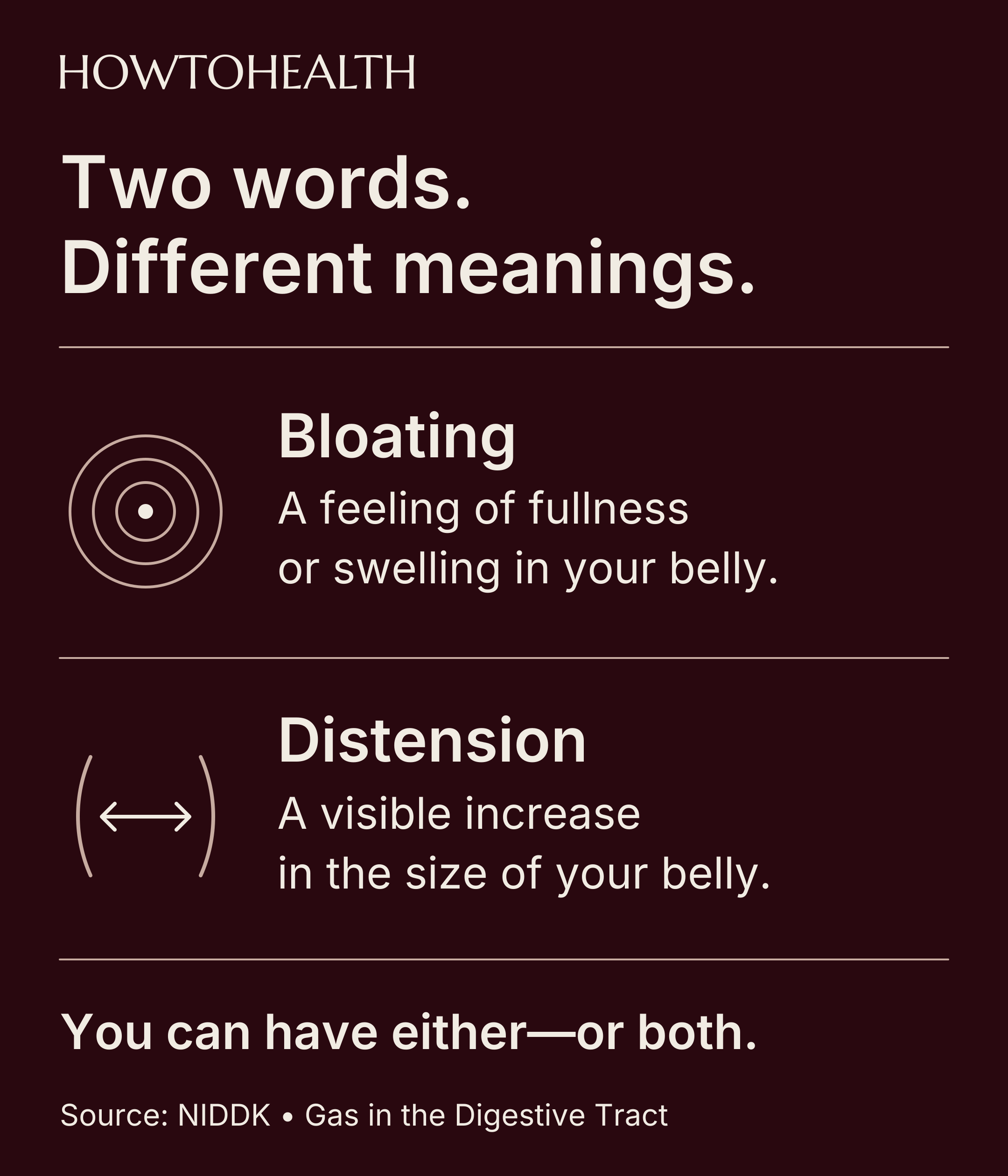
Bloating describes a feeling of fullness or swelling. Distension means the abdomen visibly enlarges. They can happen together, but they are not the same thing: you can feel bloated without seeing a change, or see your abdomen change without much discomfort.
A flat stomach at every hour of the day is an aesthetic expectation, not a digestive-health standard. Some women notice bloating or other digestive changes around their period, but the pattern varies. If your belly changes temporarily after meals and you otherwise feel well, you do not need to measure or track every change. If discomfort keeps coming back after meals, notice what it feels like and when it starts before blaming any one food.
If you repeatedly feel full after eating only a small amount, have ongoing nausea or vomiting, or have bloating that persists or disrupts daily life, talk with a clinician. Severe abdominal pain, blood in vomit, or vomiting that will not stop means you should get medical help right away.
A changing belly after eating is not a grade on your health. You do not have to earn a delicious dinner with a workout or make up for it tomorrow. Whatever Thanksgiving looks like for you, I hope you get to sit down and enjoy something you’ve been looking forward to eating.
Congratulations, we’re healthing.
— Lindsay
Which was new to you: how your stomach makes room, where nutrients are absorbed, or the difference between bloating and distension?
Sources
NIDDK: Your Digestive System & How It Works
Goodman: Digestion and absorption of major nutrients
Hellier et al.: Dipeptide absorption in man
Marciani et al.: Gastric volume, meal composition and fullness
Kuiken et al.: Measuring gastric accommodation
NIDDK: Symptoms & Causes of Gas in the Digestive Tract
Meal-induced abdominal accommodation
Lewis et al.: Measurement of abdominal distension
Bernstein et al.: Gastrointestinal symptoms around menstruation
NIDDK: Symptoms & Causes of Gastroparesis
Lacy et al.: Management of chronic abdominal distension and bloating